
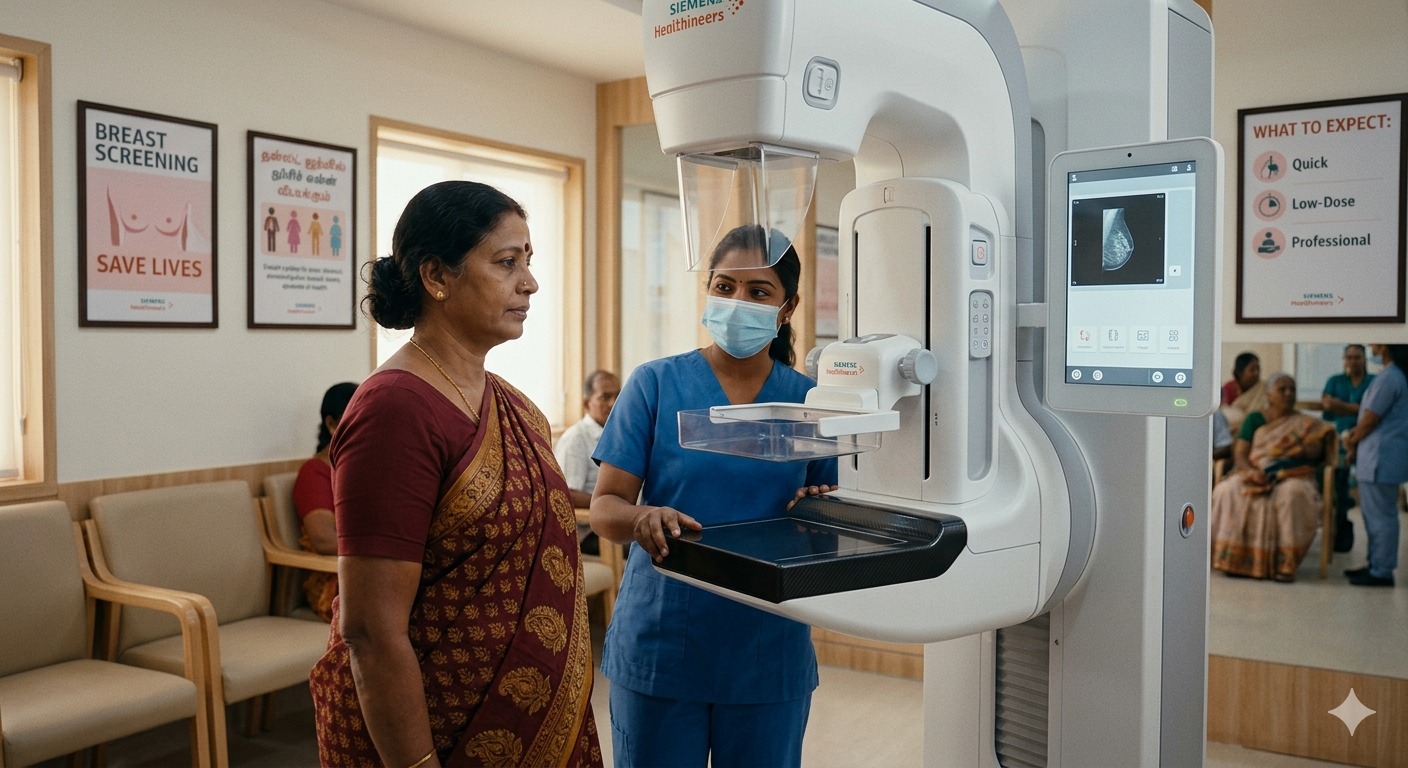
When Stage I breast cancer is detected, the five-year survival rate exceeds 95%. When it's found at Stage III or IV, that number drops dramatically. The single most powerful tool we have to catch breast cancer early is the mammogram — a quick, low-dose X-ray of the breast that takes less than 20 minutes.
Yet in India, mammography screening rates remain shockingly low. Many women delay because of fear, misinformation, or simply not knowing when to start. This article answers the questions I hear most often in my clinic.
When Should You Start Screening?
The current recommendation for women at average risk is to begin annual mammograms at age 40. If you have a first-degree relative (mother, sister, daughter) who was diagnosed with breast cancer, screening should begin 10 years earlier than the age at which your relative was diagnosed.
For women with known BRCA1 or BRCA2 mutations, screening begins even earlier and may include breast MRI in addition to mammography.
What Does a Mammogram Actually Feel Like?
The breast is compressed between two plates for a few seconds while the X-ray image is captured. It can be uncomfortable — some women describe it as pressure, others as brief pain. But it lasts only seconds per image, and the discomfort is temporary.
Tips to reduce discomfort: Schedule your mammogram for the week after your period (when breasts are least tender), avoid caffeine for a few days before, and wear a two-piece outfit so you only need to remove your top.
What Happens If Something Is Found?
Most mammogram findings are not cancer. Roughly 10% of screening mammograms lead to a callback for additional imaging, and of those, only a small percentage turn out to be malignant. A finding on a mammogram might mean:
- A benign cyst or calcification that needs no treatment
- A dense area that needs an ultrasound for a clearer look
- A suspicious finding requiring a biopsy — a quick, minimally invasive procedure
If a biopsy confirms cancer, the critical advantage is that you've caught it early — when treatment is most effective and least invasive.
I've walked this road with hundreds of women. The ones who did best are invariably the ones who came in early — before symptoms, before pain, before the cancer had time to spread. A mammogram is not something to fear. It's the most powerful act of self-care a woman over 40 can do.
The Bottom Line
Breast cancer is the most common cancer among Indian women, and its incidence is rising. But it's also one of the most treatable — when caught early. A mammogram takes 20 minutes. It could give you decades.