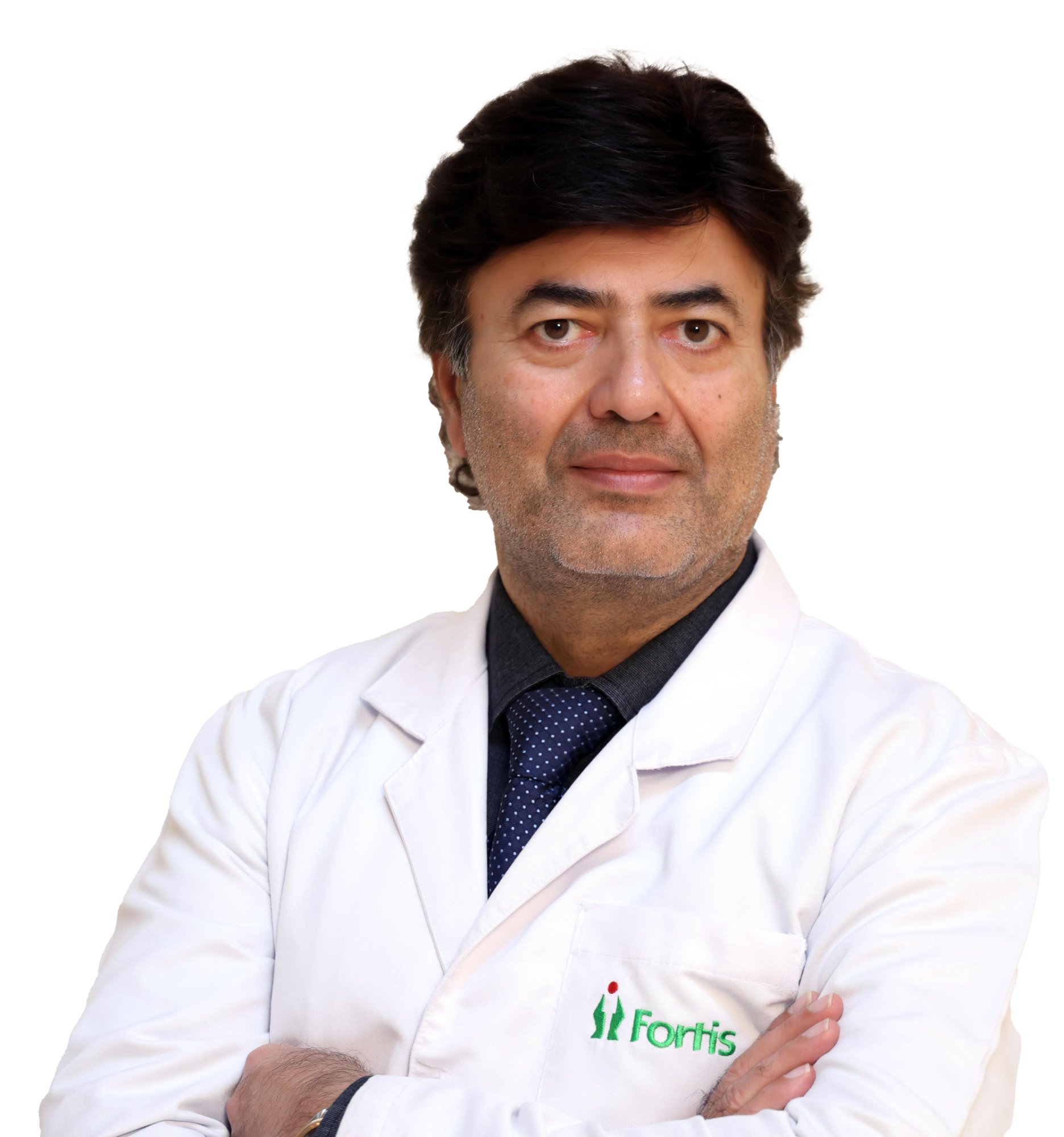
Dr. Rajeev Bedi
34 Years of Turning Fear into Hope.
When Dr. Rajeev Bedi returned to North India from the Royal Marsden Hospital in London in 2003, the Chandigarh Tricity had no DM-qualified medical oncologist. He was the first — and he chose to stay, building an oncology programme from the ground up at Fortis Mohali that now treats over 500 families every year.
His philosophy is simple: every patient deserves the same standard of care that exists anywhere in the world. And they deserve a doctor who explains it to them in their own language — Hindi, English, or Punjabi — without jargon, without rush, and without false promises.
The Journey That Shaped His Practice
MBBS — University of Bangalore
Completed foundational medical training in Karnataka, building the clinical acumen for physical examination, diagnostics, and patient-centred care that would anchor his career.
MD (General Medicine) — Gulbarga University
Specialised in Internal Medicine — the critical prerequisite for managing the severe systemic side effects of chemotherapy and immunotherapy in cancer patients.
Seven Years at AIIMS New Delhi
Joined the Cancer Department at India's premier medical institution. Seven years of intensive clinical practice and research with the highest patient volumes in the country, culminating in a DM in Medical Oncology.
Gold Medal & Geeta Mittal Award
Recognised as Best Cancer Researcher of the Year at AIIMS. Both honours were conferred personally by the President of India, Dr. A.P.J. Abdul Kalam — a watershed moment in his career.
Royal Marsden Hospital, London
Advanced fellowship in Hemato-Oncology at the world's first dedicated cancer hospital. Mastered complex blood cancer protocols, bone marrow transplantation, and stem cell therapy techniques.
First DM Oncologist in the Chandigarh Region
Returned to North India and became the first super-specialised medical oncologist to establish practice in the Tricity. Immediately organised free cancer detection camps and began building the region's oncology infrastructure.
Director, Fortis Cancer Institute, Mohali
Two decades of building and leading a comprehensive, multidisciplinary oncology centre. Today the department operates a formal Tumour Board system and serves patients from over 25 countries.
Presidential Gold Medal & Geeta Mittal Award, 2002
At the AIIMS annual convocation, Dr. Bedi received both the institutional Gold Medal and the Geeta Mittal Award for Best Cancer Researcher — a dual honour recognising exceptional quality in oncological research. The awards were conferred by the President of India, Dr. A.P.J. Abdul Kalam. His research advanced treatment protocols specific to Indian patients, accounting for genetic biomarkers, late-stage presentation patterns, and socioeconomic realities unique to the subcontinent.
What Dr. Bedi Treats
Breast Cancer
Neoadjuvant and adjuvant chemotherapy, HER2-targeted biologics, hormonal therapy, and close coordination with surgical teams.
Learn More →Lung Cancer
NSCLC and SCLC management with immunotherapy, targeted agents (EGFR, ALK), and molecular profiling–guided protocols.
Learn More →GI Cancer
Colorectal, gastric, hepatobiliary, and GIST management with multidisciplinary sequencing of surgery and chemo.
Learn More →Gynaecological Cancer
Ovarian, cervical, and endometrial cancers including HIPEC for advanced peritoneal disease and fertility preservation.
Learn More →Leukaemia & Lymphoma
ALL, AML, CLL, Hodgkin and non-Hodgkin lymphoma — Royal Marsden–trained expertise in blood cancer management.
Learn More →Head & Neck Cancer
Oral, throat, thyroid cancers. Stem cell transplantation, PICC line management, and brachytherapy coordination.
Learn More →Global Memberships
Research That Changed Practice
Early Breast Cancer Epidemiology in North India
Landmark study of 487 patients revealing Indian women present a decade younger than Western cohorts, with 88.7% undergoing mastectomy vs. breast conservation — data that reshaped regional screening guidelines.
Stem Cell Transplant Predictors for Haematopoietic Recovery
Primary author. Established CD34 antigen as the definitive marker for graft quality, replacing older assays — improving transplant success rates for blood cancer patients.
Port Catheter Fracture & Migration in Ewing's Sarcoma Patient
Documented a rare chemoport fracture migrating into the jugular vein — establishing the necessity of periodic imaging for all implanted access devices.
Rare Ocular Flutter in Chronic Lymphoid Leukaemia
Documented an exceedingly rare neurological complication of CLL (occurring in <1% of cases), adding vital data to global diagnostic algorithms for neuro-leukaemia.
Principal Investigator: APCEDEN® Dendritic Cell Immunotherapy
Leading the post-marketing surveillance of this indigenous autologous immunotherapy for refractory prostate, ovarian, colorectal, and lung cancers — with near-zero toxicity and measurable survival benefits.
Treatment works best when cancer is diagnosed early — while still small and less likely to have spread. It often means a better chance for a cure. Any abnormal signs should be brought to a doctor immediately. We can beat cancer with appropriate treatment if detected at an early stage.— Dr. Rajeev Bedi, Chandigarh Press Club Health Talk, 2026
A Doctor Who Shows Up
"Stronger Than Cancer" — Book & CanSurvive Group
Co-led the publication of survivor stories released by Punjabi icon Gurdas Maan. The book chronicles journeys of 8 patients, designed to incubate hope in the newly diagnosed. Founded the Saarthak support group — organising counselling, movie screenings, and peer sessions for 150+ survivors.
World Cancer Day & Community Health Drives
Perennial organiser of World Cancer Day events — from balloon releases symbolising resilience, to week-long awareness campaigns with survivor felicitation, nursing staff educational skits, and myth-busting sessions. In 2026, briefed 80+ journalists at Chandigarh Press Club on early detection.
Doordarshan, Radio & Digital Outreach
Regular contributor to Doordarshan and radio programmes. Featured on the LiveLifeMore YouTube show, breaking down cancer biology — mutation, angiogenesis, metastasis — in language anyone can understand. Supported the Harley Owners Group "Ride for Cancer" awareness rally.
Cervical Cancer Prevention Advocacy
Raised national alarm on shifting cancer demographics — the male-to-female ratio moved from 49:51 to 39:61 in a decade. Advocates aggressively for HPV vaccination and Pap smear screening, citing that 70% of women present at advanced stages due to systemic socioeconomic barriers.